
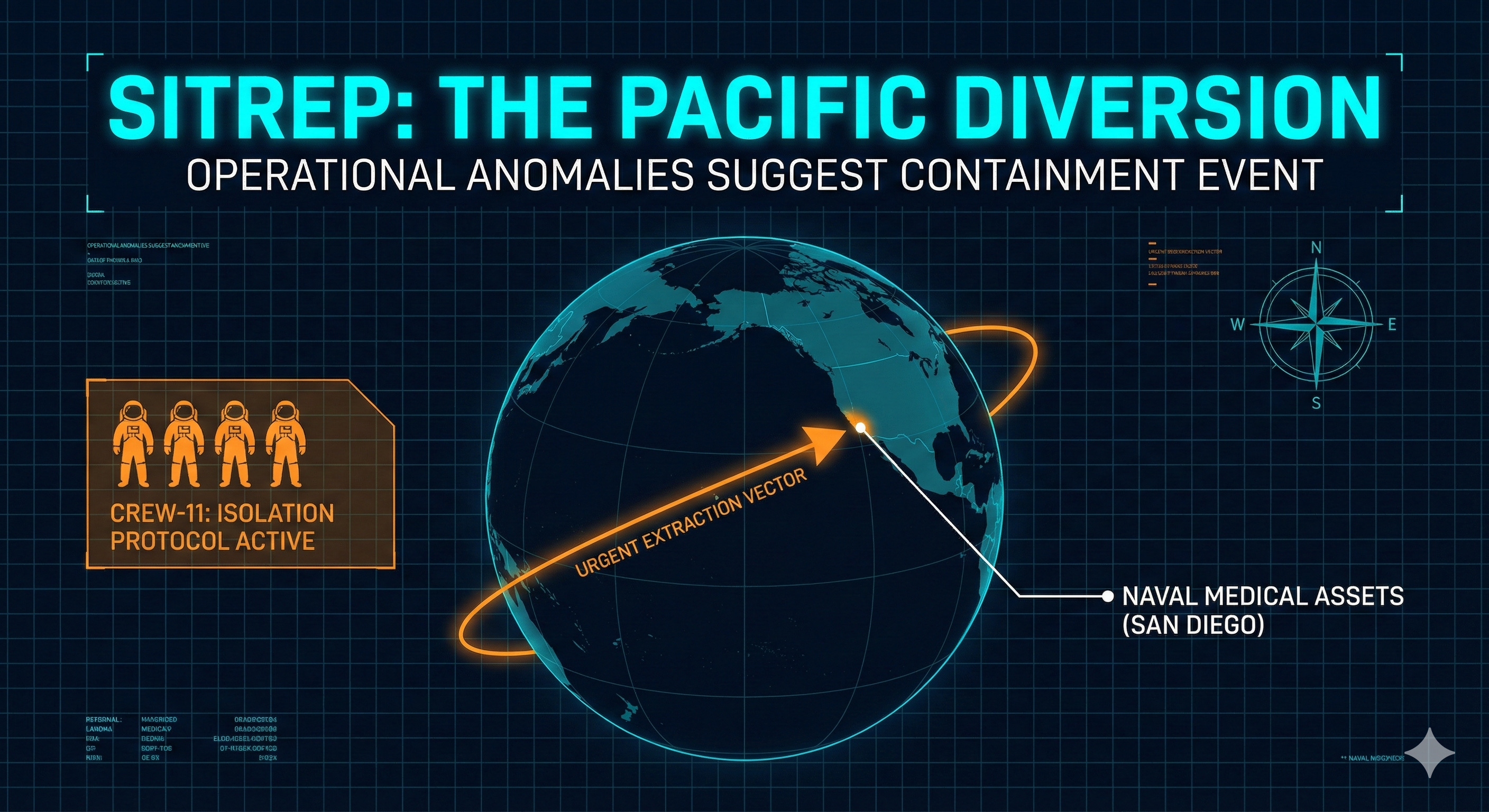
SITREP: The Pacific Diversion. Deconstructing the Crew-11 Evacuation.
Operational anomalies in the Jan 15 splashdown suggest containment protocols rather than routine medical care. An analysis of the San Diego vector.

DATE: 2026-01-15
SUBJECT: Crew-11 Emergency Return
DATA CONFIDENCE: VERIFIED (Orbital/Logistics) / HYPOTHESIS (Medical Cause)
CLEARANCE: Public
The official narrative regarding the early return of SpaceX Crew-11 is simple: a singular “medical issue” necessitated an expedited return.
However, the operational data tells a different story.
At The Sentinel, we do not traffic in rumor. We traffic in logistics. When the logistical footprint of an operation contradicts the public statement, an “Authority Gap” emerges. Today’s splashdown of Crew-11 represents a significant deviation from standard operating procedure (SOP).
We have analyzed the trajectory, the recovery assets, and the post-splashdown movements. The data suggests that NASA is not merely managing a patient; they are managing a containment event.
1. The Trajectory Anomaly
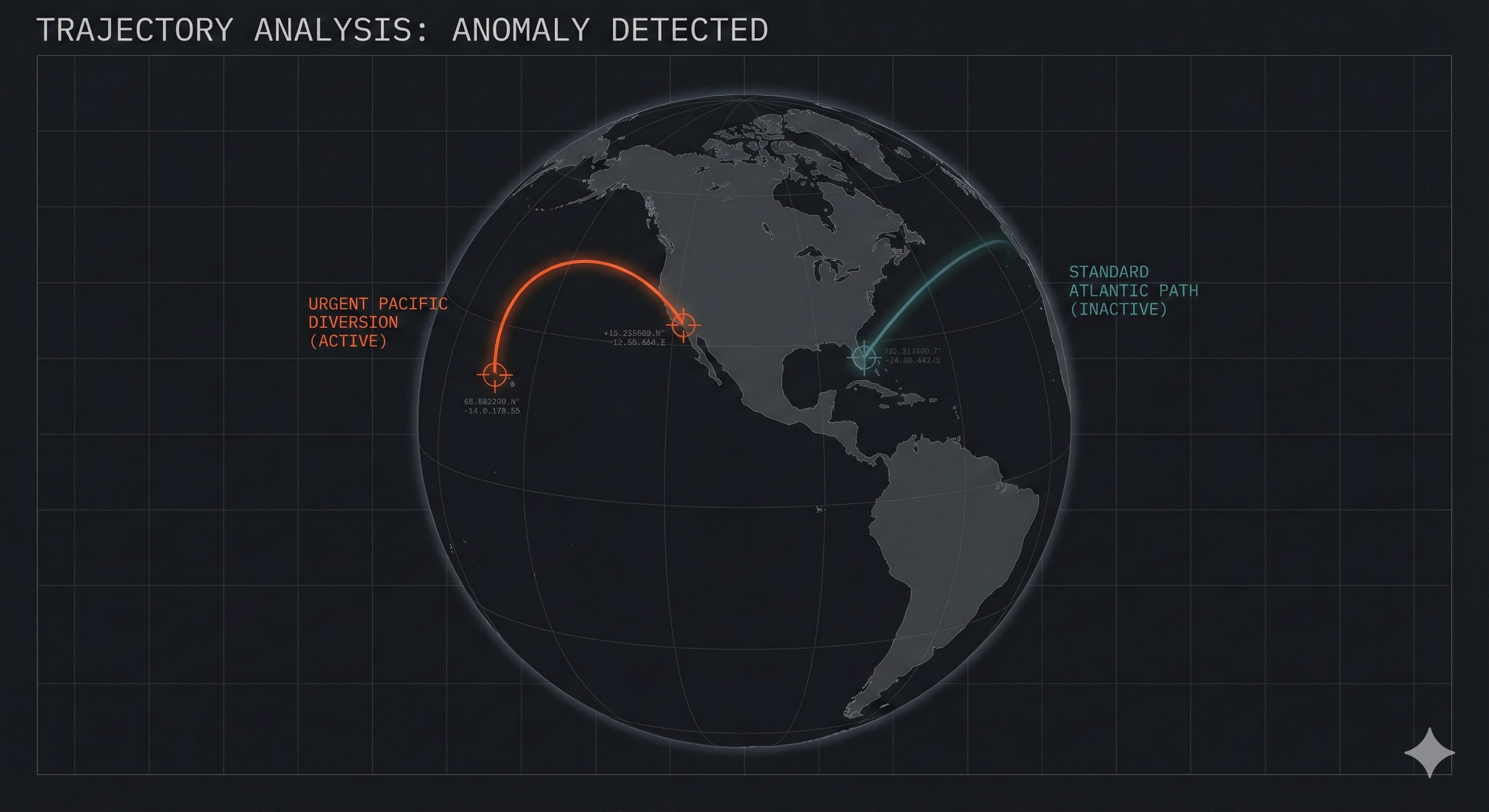
Standard Protocol: SpaceX Dragon capsules prioritize Atlantic or Gulf of Mexico splashdowns. This proximity to the Kennedy Space Center facilitates rapid handover to NASA Johnson Space Center (JSC) in Houston.
The Event: Crew-11 utilized a rare Pacific trajectory, splashing down off the coast of California at 03:41 local time.
The Analyst View: NASA cited this as the “fastest return window” (11 hours). This confirms extreme urgency. A shift from Atlantic to Pacific recovery assets is a massive logistical burden, undertaken only when time is the critical variable. Whatever occurred on the ISS required immediate extraction, superseding the safety and convenience of standard recovery zones.
2. The “Cluster” Hospitalization
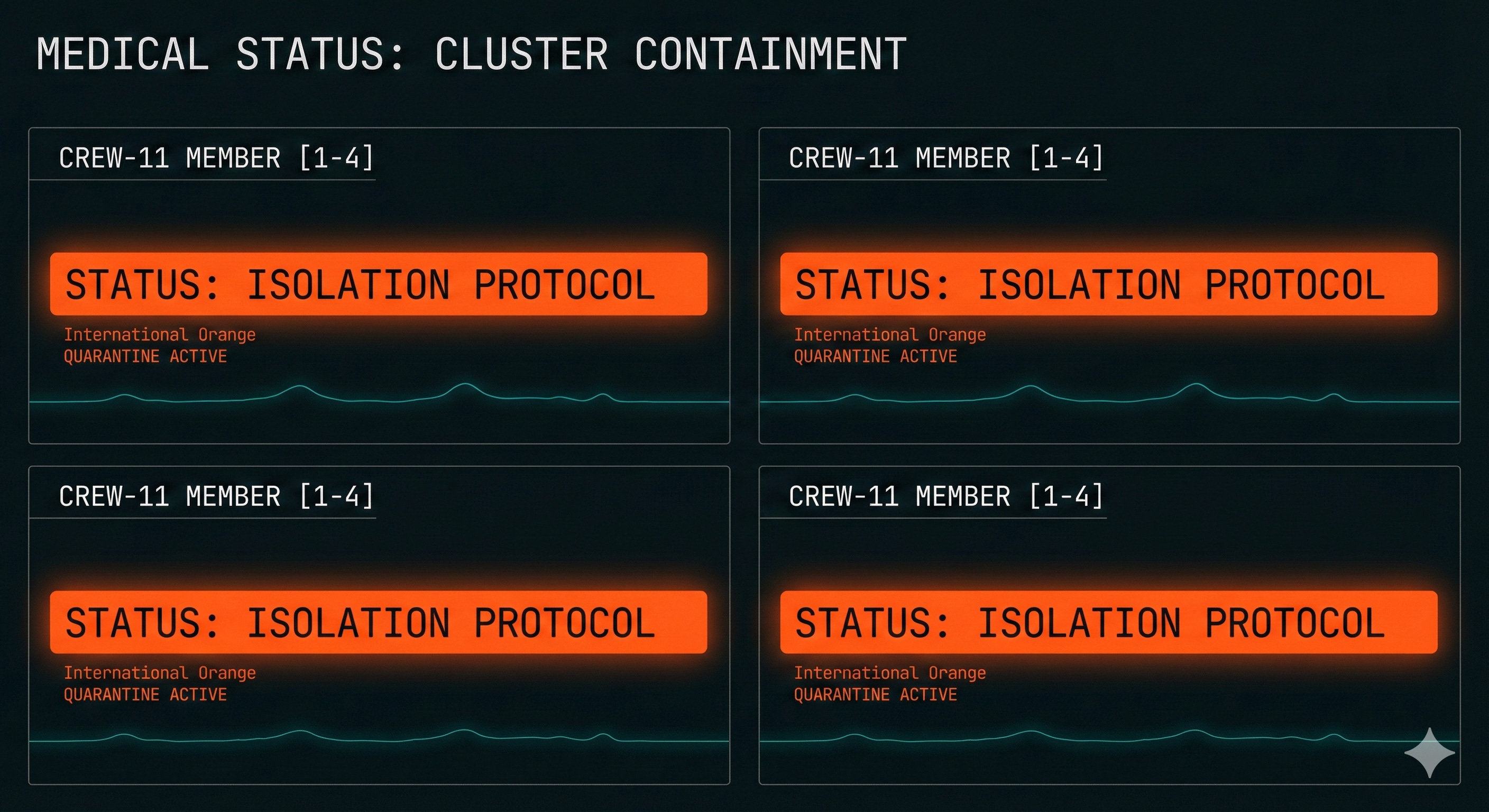
Official Statement: All four crew members—Zena Cardman, Mike Fincke, Kimiya Yui, and Oleg Platonov—were transported to a medical facility in San Diego “for observation” to “keep the crew together.”
The Analyst View: This is the primary statistical outlier. If a single astronaut suffers a non-communicable medical event (e.g., appendicitis, cardiac arrhythmia, decompression sickness), standard triage dictates they are isolated for treatment while the healthy crew members are debriefed and reunited with families.
Detaining the entire crew for overnight observation implies a shared exposure event.
Possibilities based on SOP:
ECLSS Failure: A toxic leak (ammonia or coolant) within the station environment.
Radiological Event: Unscheduled exposure during the aborted Jan 7 EVA preparations.
Biological Contaminant: An unknown pathogen requiring quarantine protocols.
The decision to treat the healthy crew as “patients” rather than “passengers” is a telltale sign of containment.
3. The San Diego Vector
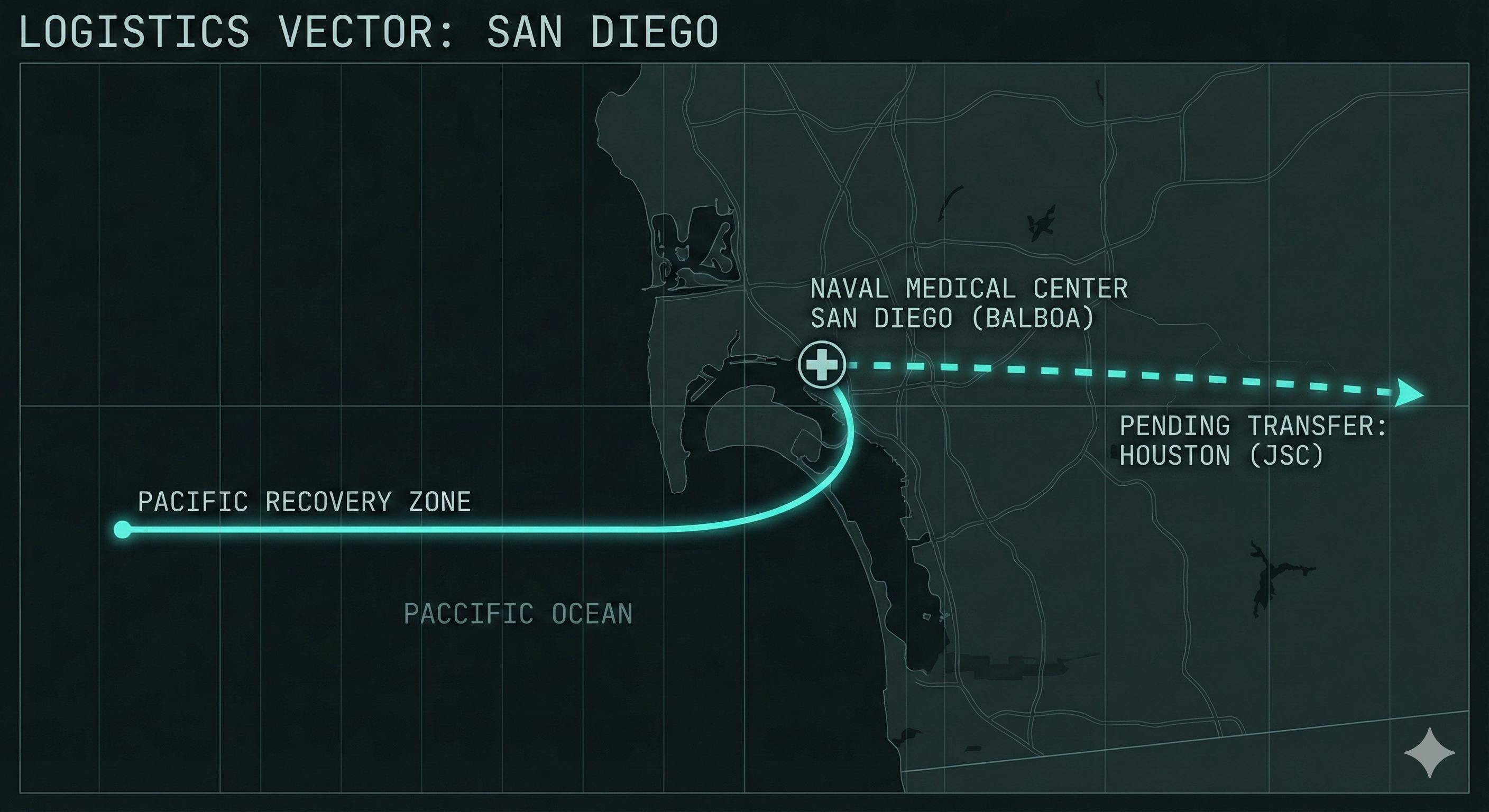
The diversion to San Diego places the crew in the operational backyard of the Naval Medical Center San Diego (Balboa). While civilian facilities (UCSD) are capable, Balboa offers secure wards and direct interface with defense intelligence apparatuses.
We are currently monitoring flight logs for NASA Gulfstream assets (N944NA, N945NA). If the crew is not transferred to Houston within 24 hours, the probability of a classified containment scenario increases to >85%.
4. The “Skeleton Crew” Risk Factor
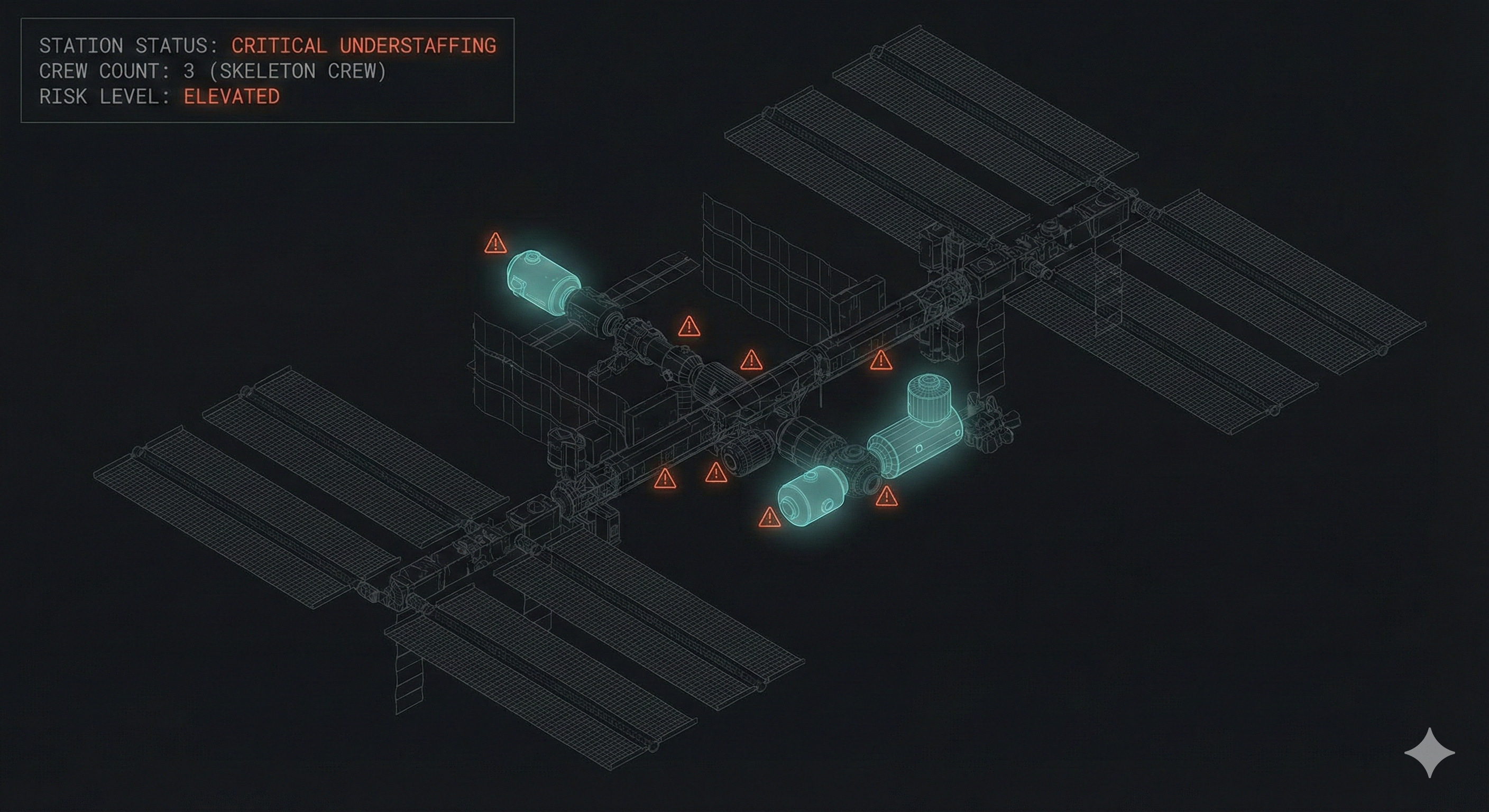
The ISS has been left with a crew of three (1 American, 2 Russians). This degrades the station’s damage control capabilities. Abandoning the station to a skeleton crew indicates that the removal of Crew-11 was not just necessary for the patient, but necessary for the safety of the station itself.
Conclusion: Assessment
We are witnessing a “sanitize and stabilize” operation. The silence from Administrator Isaacman is disciplined, but the movements of the recovery vessels speak volumes.
Status: WATCH & VERIFY.